
The Beating Heart of Rose City: A History of Sanback Dam
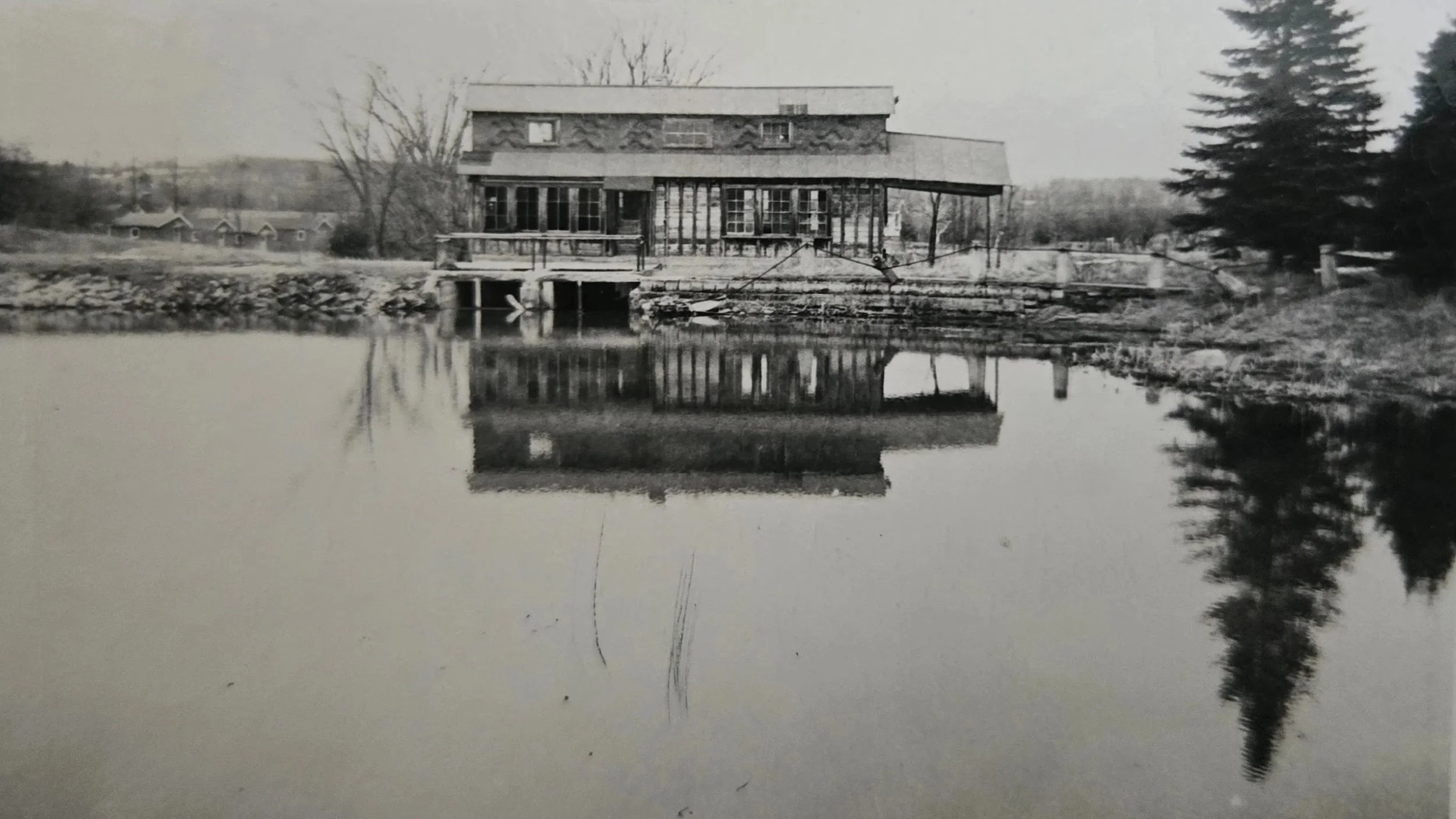
Sanback Dam, mill and pond, ca. 1925
Huron Pines is removing Sanback Dam in Rose City. This $4 million project is the largest-scale dam removal in our organization’s history and will reconnect Beechwood Creek to the rest of the Rifle River Watershed. The following piece is meant to preserve some of the history of the site as the community writes the next chapter for Metcalf Park.
Sanback Dam was once the beating heart of Rose City. For 70 years it powered machines that ripped logs into lumber, milled grain into flour and feed, and brought the first glow of electric lighting to the town it helped build. The dam and its industries were the town’s biggest employer with 50 workers at one time. But for the decades since operations ceased in 1955, Sanback Dam remained as a 20-foot wall of crumbling concrete and rusting steel at the center of Metcalf Park, posing a safety hazard for people and causing significant ecological harm to Beechwood Creek.
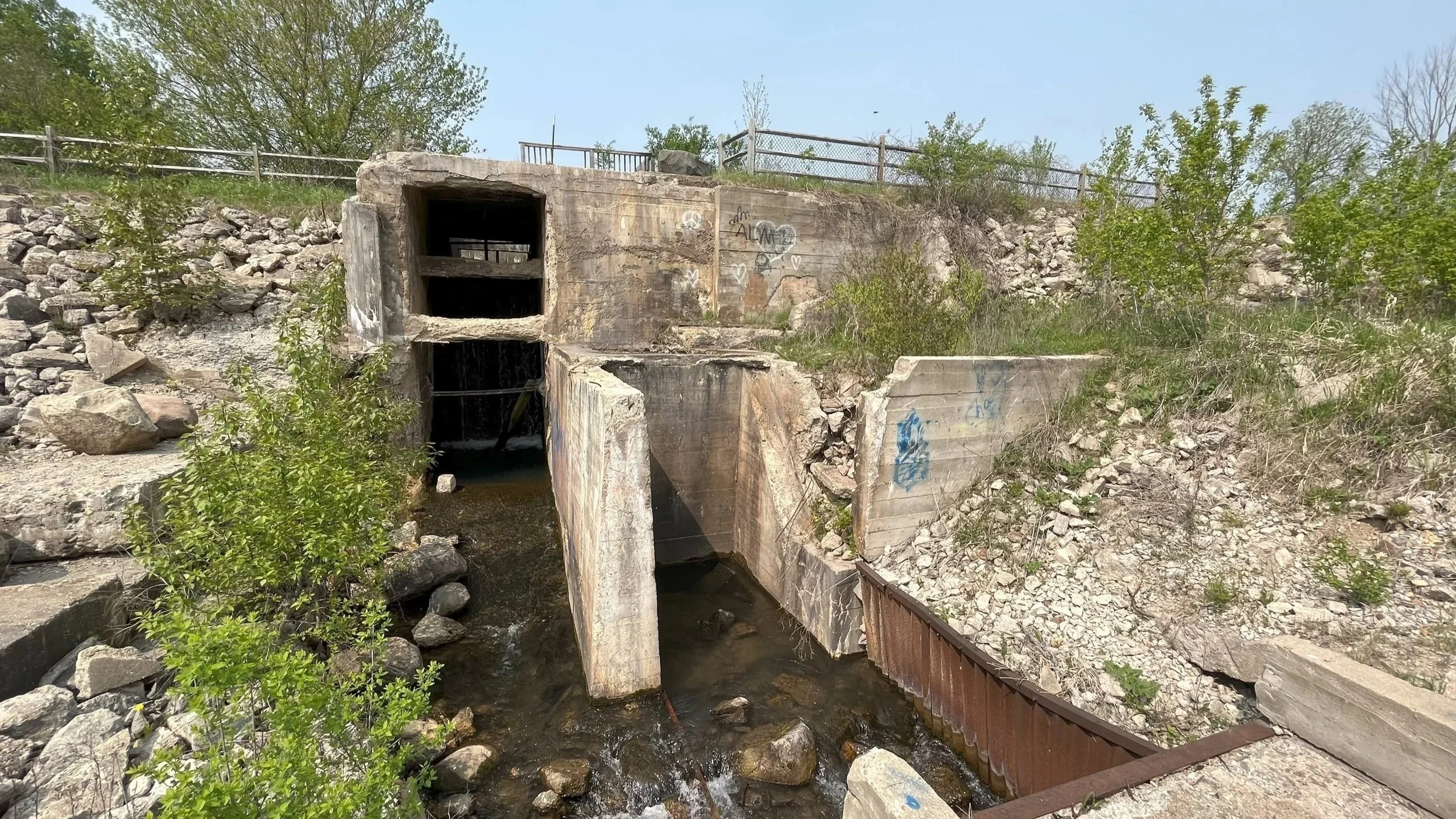
Sanback Dam in 2023
Now, a century and a half after it was first built, Sanback Dam is gone and the community is deciding what’s next for a restored Metcalf Park.
Read more: Removing Sanback Dam for a Healthier Watershed
The flowing water of Beechwood Creek carries a lot of energy. Early settlers built a dam here around 1877 during the area’s peak logging era to capture some of this energy and power industry for the town which would become Rose City. Logs were stored in a mill pond upstream of the dam and hauled out, one at a time, to be milled into lumber. A gristmill and flour mill pulverized wheat and corn into animal feed and flour. An electric light plant, built in 1905, turned river current into electricity to light homes and shops. All of these industries once operated here, each one powered by Beechwood Creek.
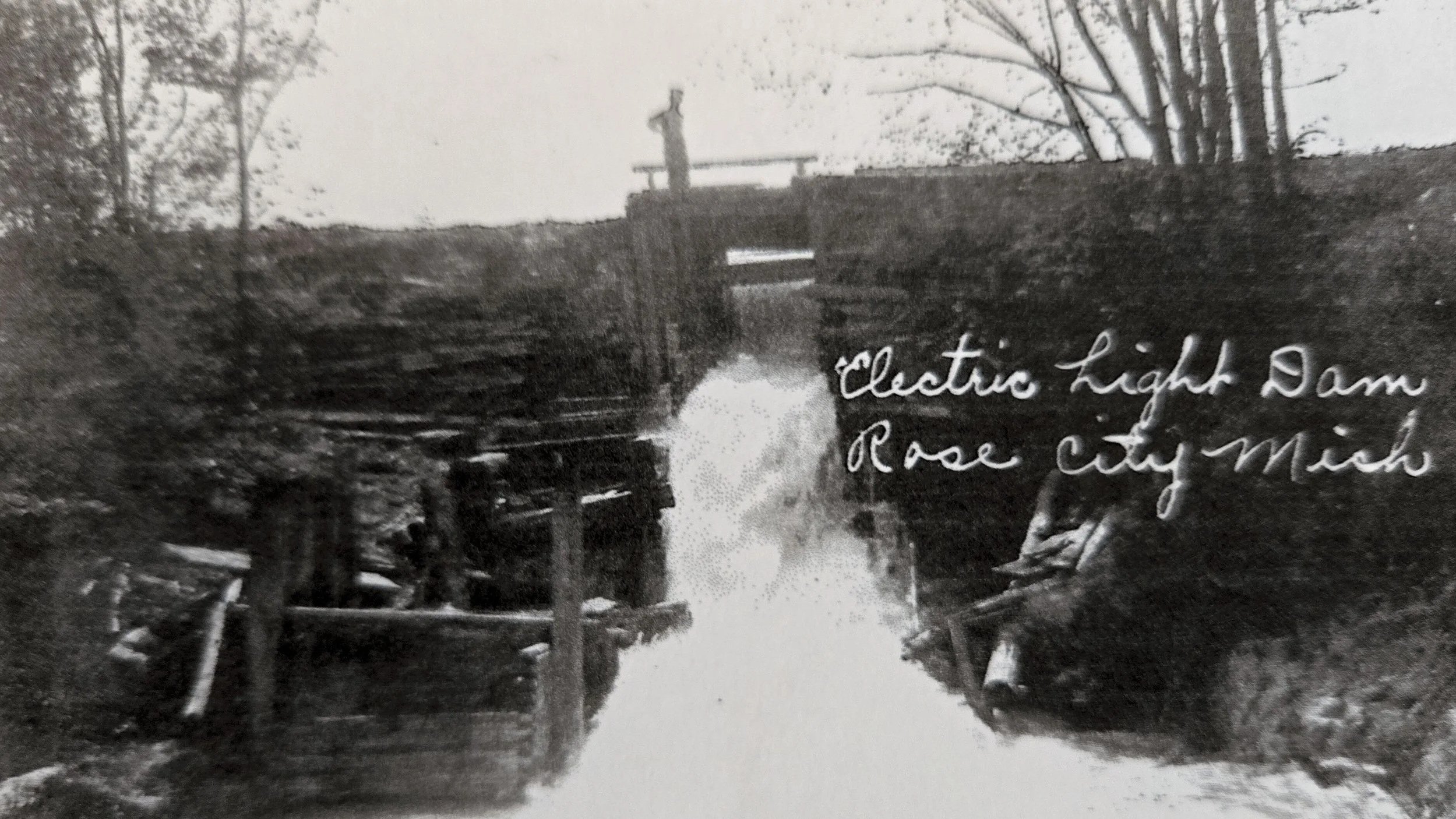
“Electric Light Dam, Rose City Mich.,” undated photo
The son of Swedish immigrants, Charles Sanback (1863-1944) bought the property and its industries in 1917. He rented boats to anglers who caught trout on the mill pond, and he and his wife Mary Rosebush (1870-1937) raised five children on the property. A fire destroyed the electric light plant and mill in 1923, leaving the town without power for two years until a new plant was built offsite. Sanback rebuilt his mill in 1925.
The property would change hands again in 1947 when Glenn Metcalf bought the operation to produce lumber, pallets and crates for the automobile industry. A sawdust burner would spark a fire in 1955 that destroyed the mill again. Metcalf ran out of money while rebuilding, and unfinished buildings stood for decades until they were torn down.

The shell of an old utility truck bears the name, “G.E. Metcalf Lumber Co.,” the last operation to be powered by Sanback Dam.
During the removal of Sanback Dam this summer, excavator crews turned up a number of artifacts including bits of machinery, saw blades, hand tools, glass bottles, vehicle license plates and the axle off a Ford Model T, each one speaking to the industrious history of this site. This history will be preserved with interpretive signage installed at the site once the project is complete.
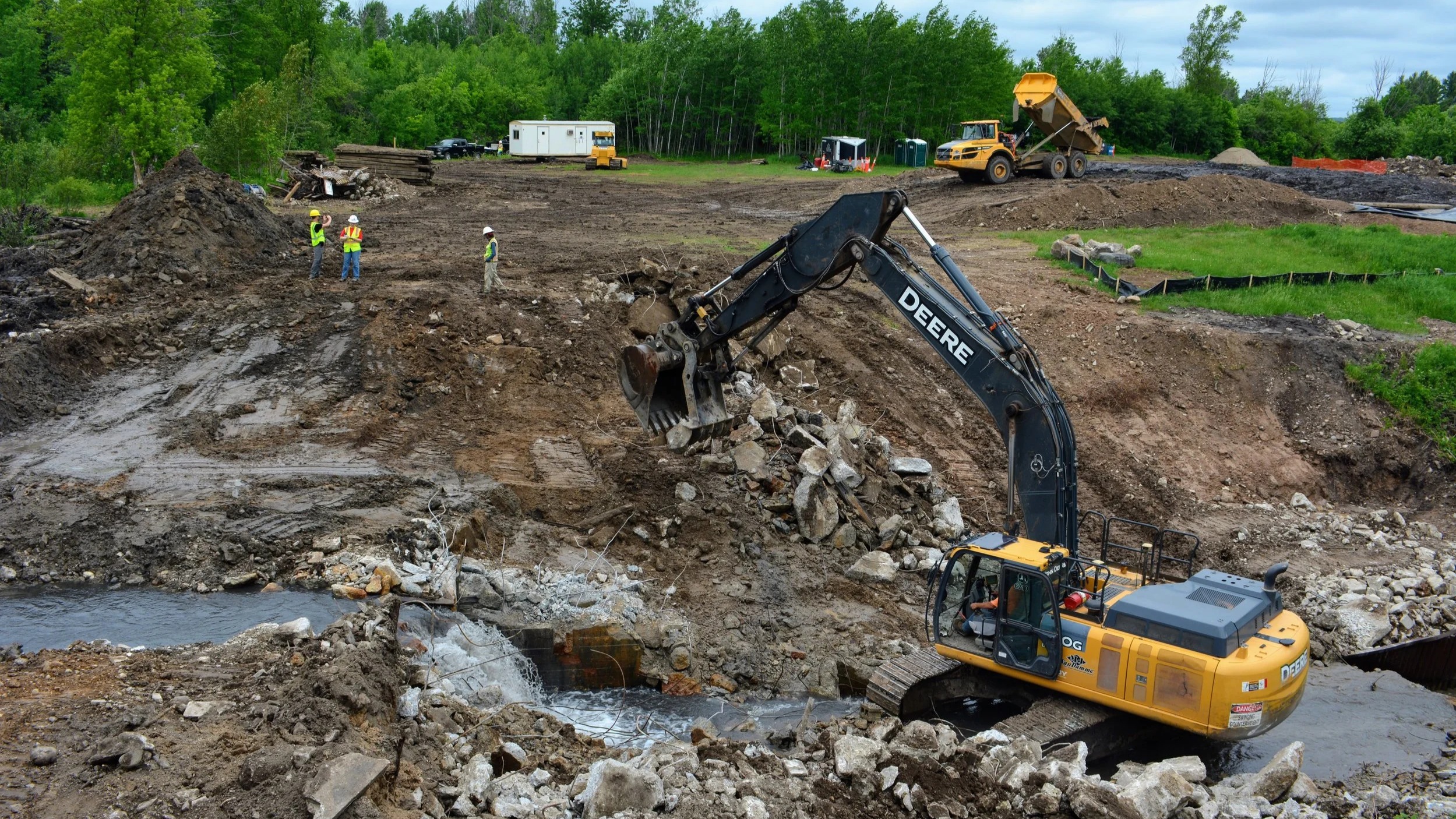
Removal of Sanback Dam, July 2026
Further work this summer will include restoration of the stream channel and installation of native plants throughout the site, all while the community explores new opportunities for recreation which could include trails, a footbridge or fishing platform and other features. A community open house is slated for Aug. 21, 2026 and a survey is available online.
Ecologically, this project will reconnect Beechwood Creek to the rest of the Rifle River Watershed, restoring vital spawning and refuge habitat while supplying cold spring water downstream. The Rifle River is unique to Michigan as it is the only undammed major river in Northeast Michigan, meaning flows freely from Rose City all the way to Saginaw Bay.
You can read more about the removal of Sanback Dam on our Active Projects page and follow our social media for regular project updates.