Rekindling the Glade: Inside Huron Pines’ First Prescribed Burn
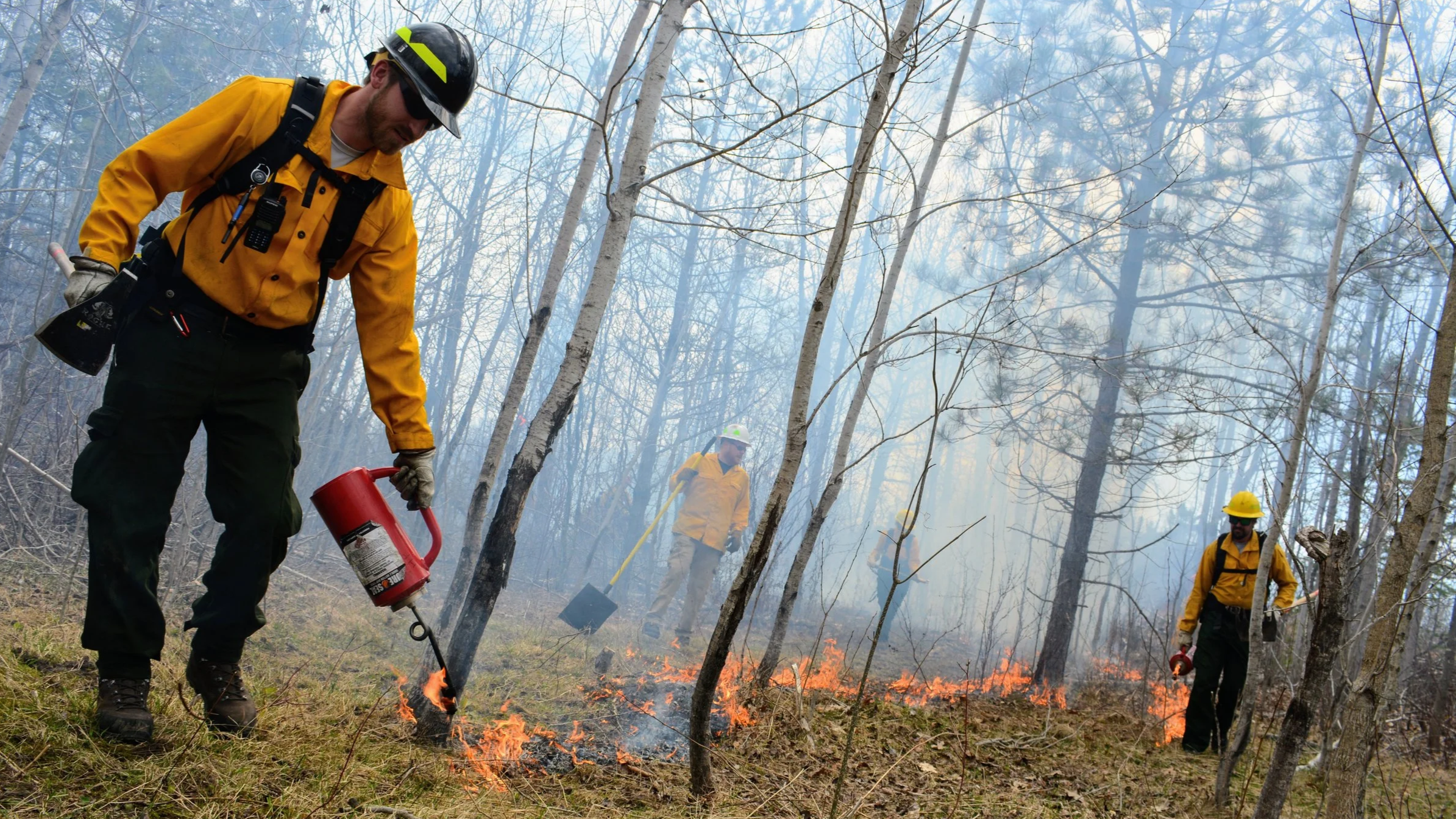
Derek Hartline, Conservation Biologist for Little Traverse Bay Bands of Odawa Indians, uses a drip torch to ignite a prescribed burn at the edge of a limestone glade. Hartline was among members of a fire collaborative assisting on our first burn in April 2026.
The unmistakable crackle of fire is not something most people would expect or want in a protected natural area. But this spring, we purposely brought fire to Emily Min Hunt Preserve for the first time as an organization, marking an exciting new chapter in our ongoing work there.
The preserve wasn’t always wild. For part of the last century, this land was a working apple orchard, its rocky soil tilled and shaped by human hands. Beneath that agricultural past lay something remarkable: a limestone bedrock glade, a globally rare habitat occurring in the northern Great Lakes. Since 2019, our team has been quietly coaxing this landscape back to a more natural state by removing invasive shrubs and scattering native seed gathered from nearby wildlands. Bluestem grasses and common milkweed have returned, attracting butterflies, birds and beneficial insects to the rocky landscape. But something has been missing.
“Limestone glades are maintained by seasonal flooding and extreme drought and some show a strong correlation to fire,” said Samantha Nellis, Director of Conservation Science at Huron Pines. “Since we can’t control drought or floods, and because the preserve is degraded from past use as an orchard, it became clear that fire is the important next step to help the glade reach its full potential.”
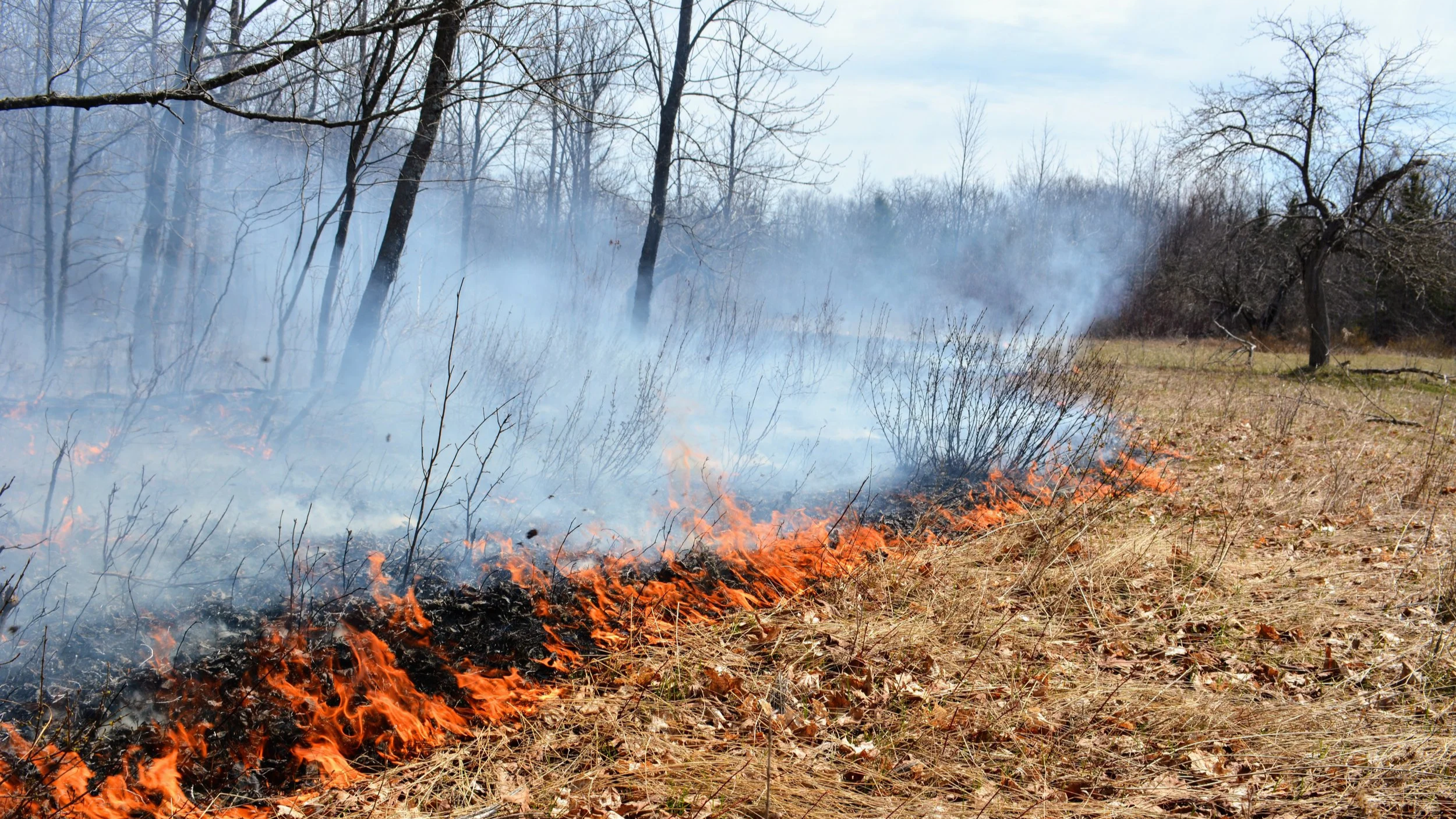
Fire spreads across the limestone bedrock glade, consuming leaves and dry grasses.
Fire is not always foe — it’s a natural and sometimes integral part of the ecosystem. Long before European settlement, fires moved across Michigan’s landscapes, ignited by lightning strikes or as a practice of Indigenous cultures. In both cases, fire clears away dead material, replenishes soil and maintains the open habitat conditions certain plants and animals need to survive. Prescribed burns, carefully planned and executed under precise weather conditions, are how land stewards like us are bringing back that missing element today.
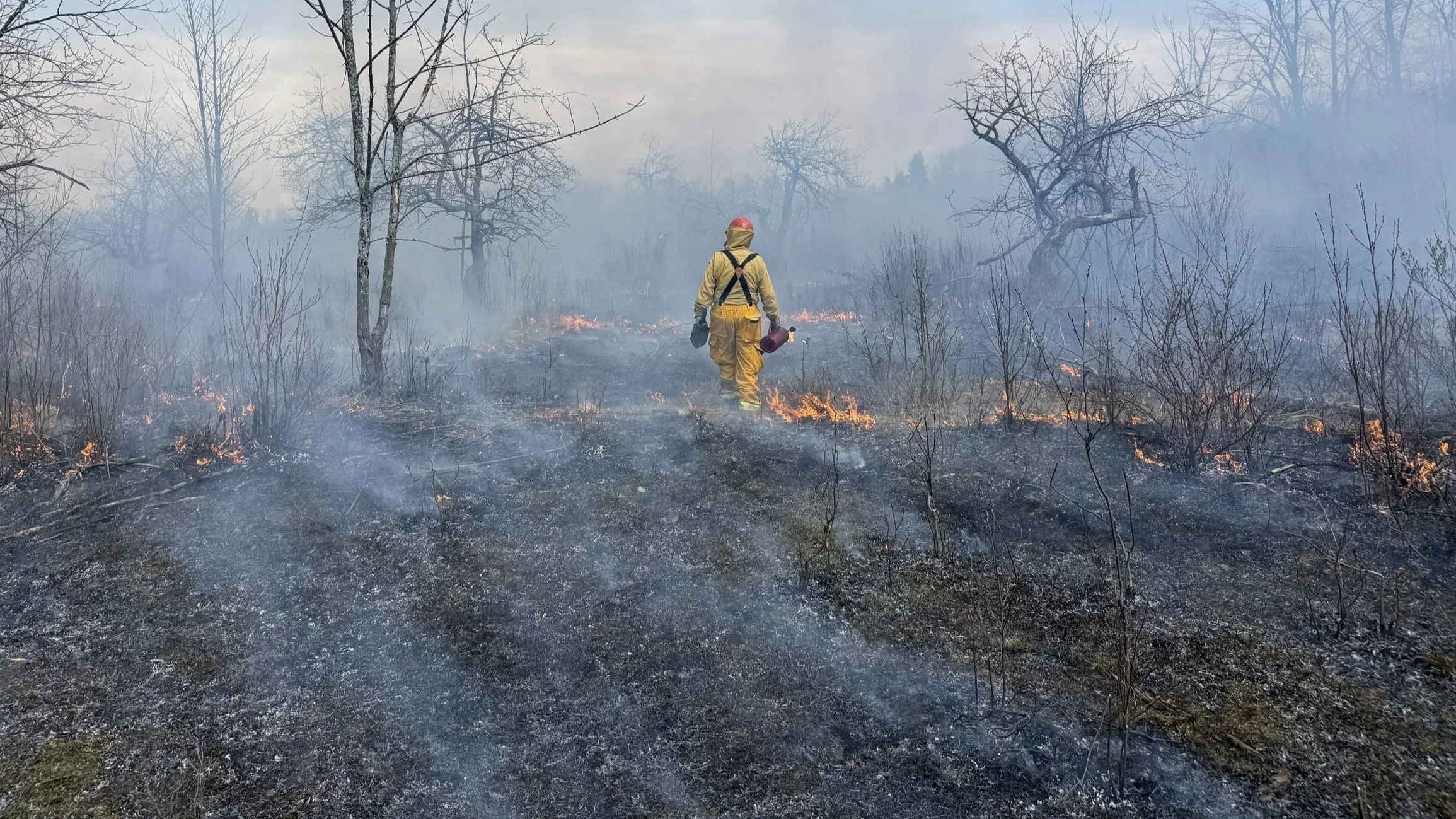
Burn boss Steve Cross walks through smoke and flame as our first prescribed burn progresses through the limestone glade at Emily Min Hunt Preserve.
The moment finally came at noon April 23 when the spark of a lighter lit the business end of a handheld drip torch. With a few swings of the fuel-filled steel canister, burn boss Steve Cross sent arcs of burning fuel over the ground, igniting dry grass in an instant when it landed. As the fire crept across the glade, a light breeze carried away the smoke, revealing blackened earth and wisps of gray ash swirling over newly exposed bedrock. The fire was doing its job and our burn crew did theirs, keeping a watchful eye as the fire worked its way across the 20-acre burn area.
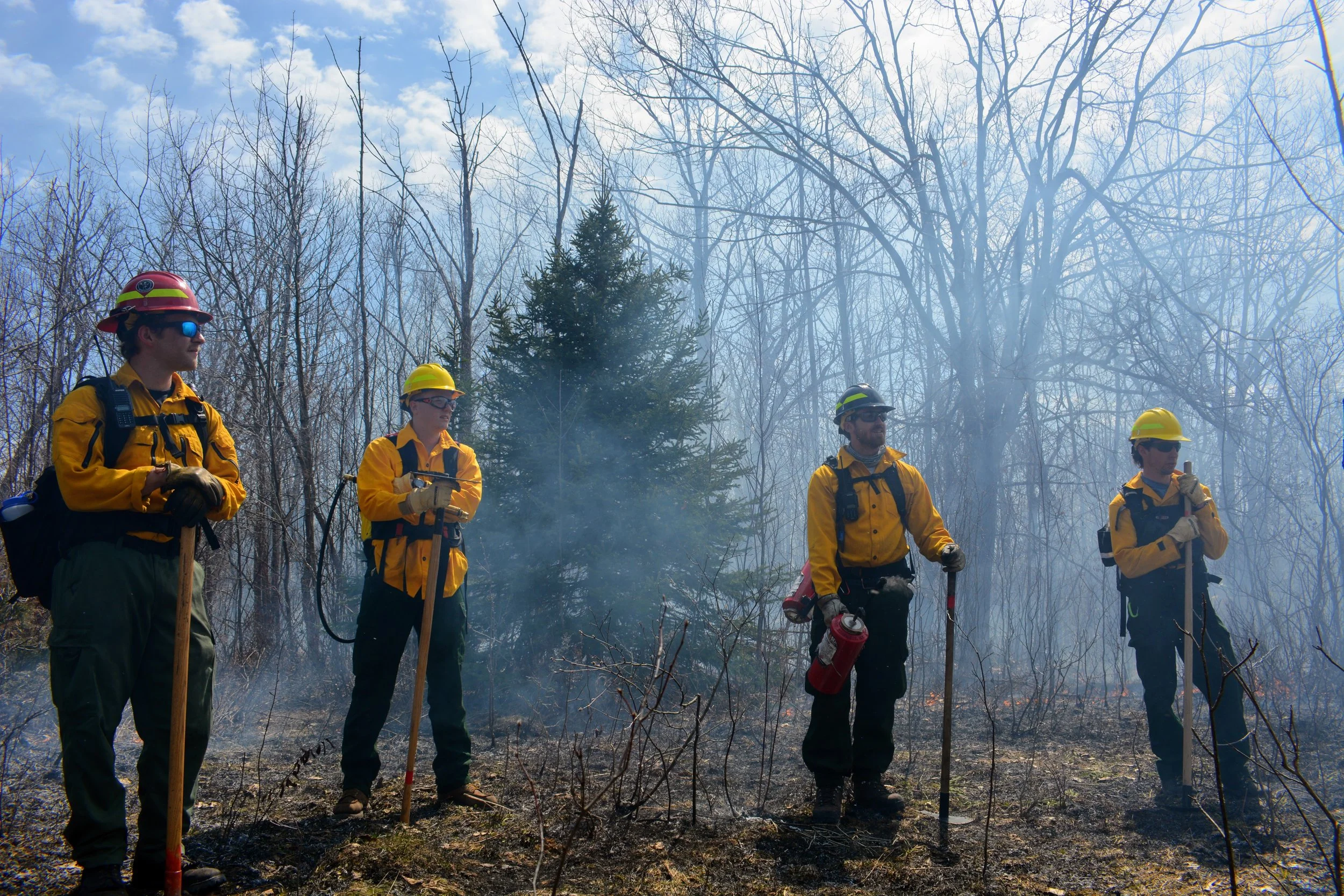
The burn crew minds the fire line.
Six hours later, the last few hot spots and smoldering stumps were cold and our crew convened at the forest edge to rest. The sound of crackling fire had been replaced with the calls of songbirds perched in the trees above, seemingly celebrating the abundance of insects and tender new shoots to come. Today, months since the burn, lush grasses and wildflowers are the only evidence a fire ever occurred.
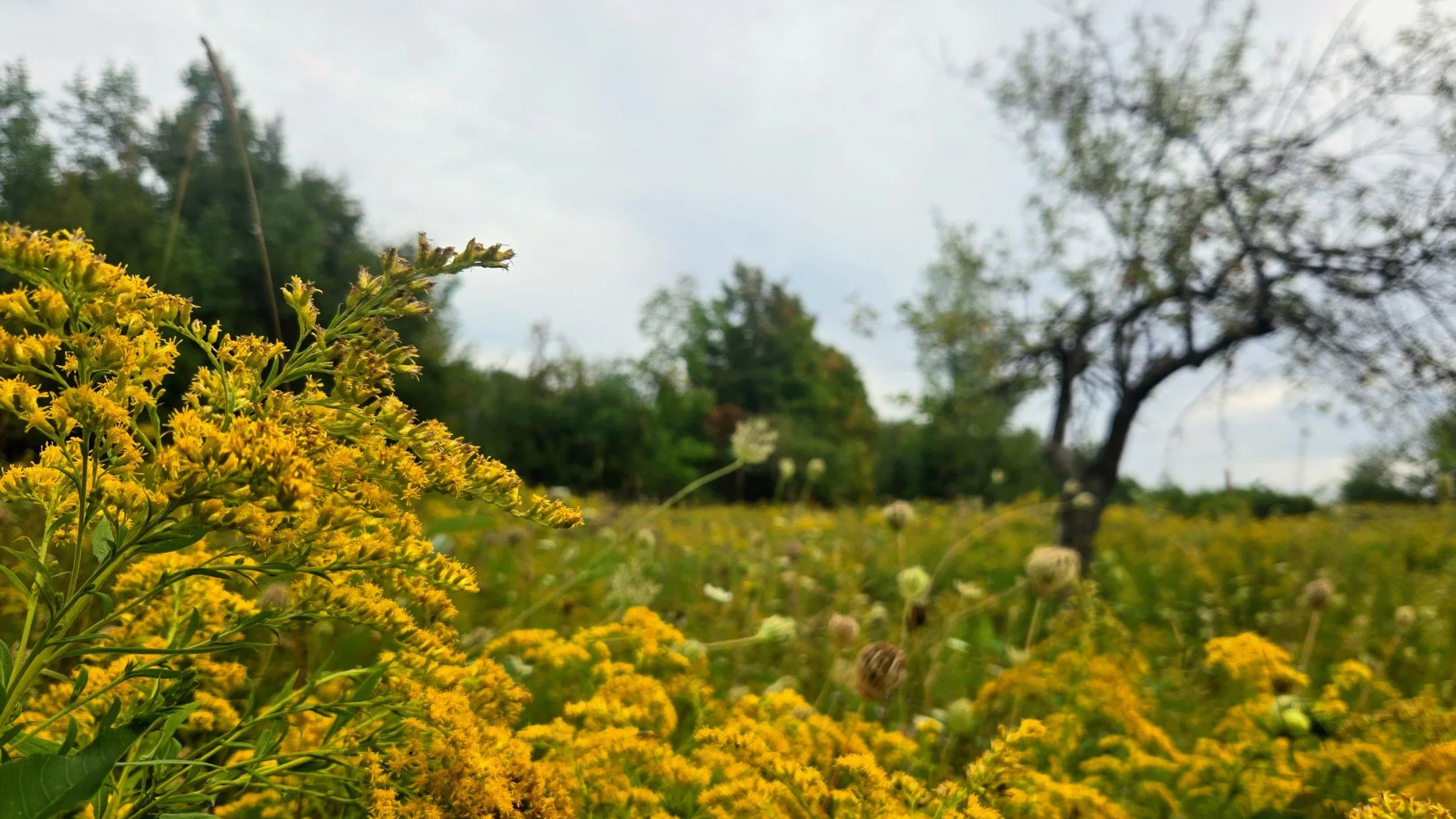
Burned in April 2026, the glade was ablaze with wildflowers by September the same year.
“I think this burn was a major accomplishment — we’re getting more comfortable with using prescribed fire at our preserves and it shows our Fire Program is an effective way to pull together the people and resources we need to do this work,” said Habitat Specialist Daniel Judd.
The spring 2026 burn is the first chapter of a longer story — one about learning to work with nature’s tools rather than around them. This project was made possible through a grant from the National Fish and Wildlife Foundation with personnel support from our partners at Grand Traverse Regional Land Conservancy, Little Traverse Bay Bands of Odawa Indians and volunteer fire practitioners.
This story originally appeared in our 2026 Summer Update.