
Active Project
Welcome to
the North Branch Au Sable at Twin Bridge Road
Reconnecting 20 Upstream Miles of a Treasured Coldwater Stream
“Xxxxxx.” - Josh Leisen, Senior Project Manager
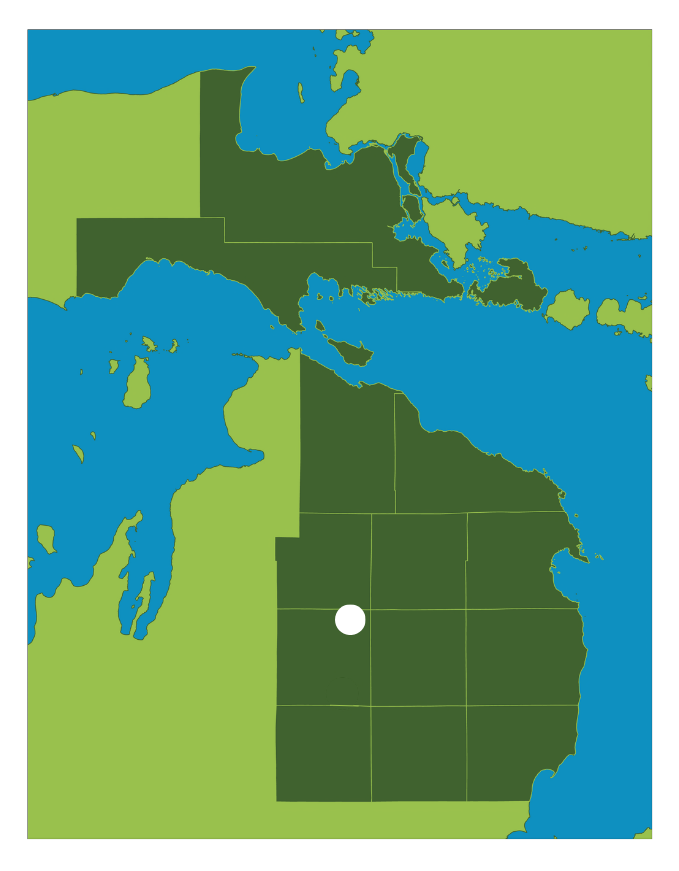
A tributary of the famed Au Sable River, the North Branch brings a natural beauty and renowned coldwater fishery of its own. Originating from a chain of deep, spring-fed lakes in southern Otsego County and winding its way 33 miles south to meet the Main Branch east of Grayling, the North Branch has all the character of a classic Northern Michigan stream — wild surroundings, cold, clear water and plenty of wood structure holding brook and brown trout.
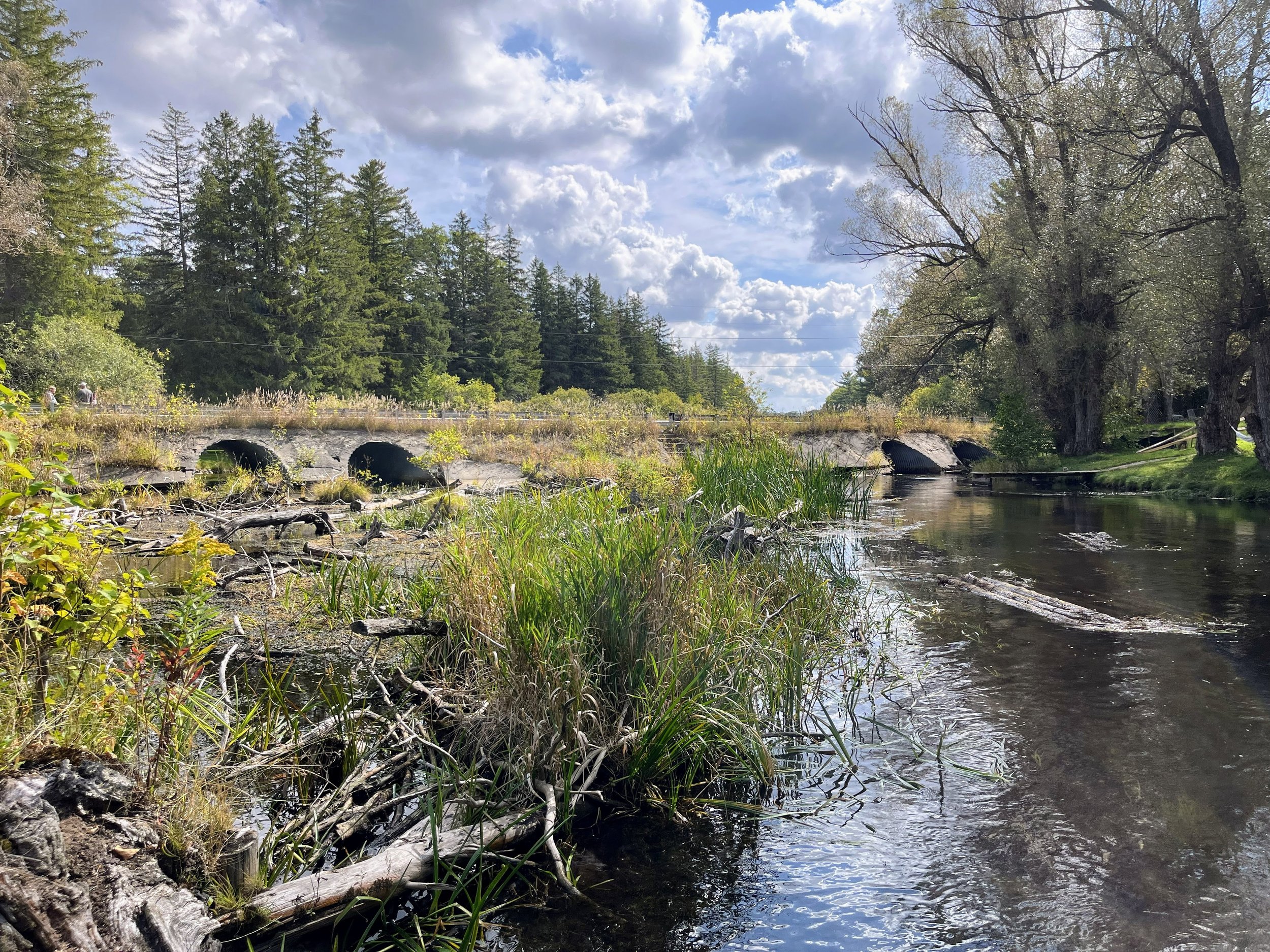
Near its midway point, however, the North Branch hits a wall when it meets Twin Bridge Road. Four culverts meant to pass water through this road crossing are severely undersized for the task, and instead restrict the flow of the river and prevent the movement of fish to upstream habitat.
To correct this longstanding problem, Huron Pines is preparing for a large-scale construction project at this site in 2027 which will replace these culverts with a pair of concrete bridges, restoring natural river function while reconnecting vital coldwater habitat for fish and other river life.
Undersized culverts have broad negative effects on both a river and road infrastructure, all of which are on full display at the Twin Bridge crossing. The river here is 100 feet wide but the culverts accommodate only 40 percent of its width, making Twin Bridge Road behave somewhat like a dam and impound water and sediment on the upstream side. The road structure is also old, and cracks in the concrete headwalls along both sides of the crossing allow water to seep in, furthering the risk of a road washout which would cause catastrophic damage to habitat and downstream property.
Water accelerates as it flows through an undersized culvert, exiting on the downstream side at high speed and pressure. At Twin Bridge Road, this prevents young trout and other river life from reaching more than 20 miles of upstream habitat where they could otherwise forage, spawn and seek summer refuge. This is a defining characteristic of an undersized culvert and has led Huron Pines to restore more than 140 crossings throughout Northern Michigan.
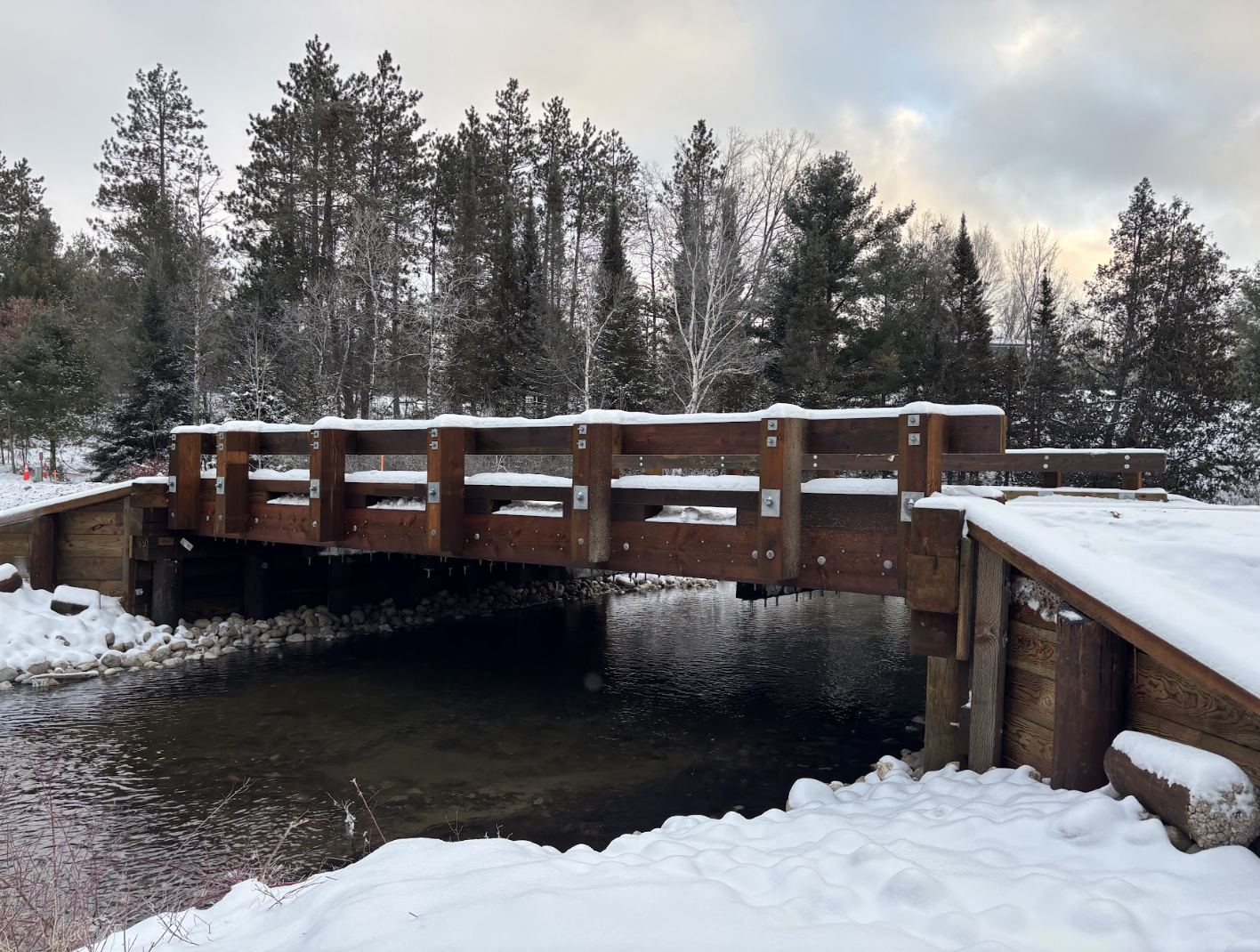
During construction, all four culverts will be removed from the river along with portions of road material. In their place, a pair of 72-foot concrete bridges will be installed to accommodate the river’s full width at this site even at flood stage. A successful project will allow the North Branch will flow naturally through this crossing at all times of the year, while fish move freely upstream, and anglers and paddlers pass safely beneath the bridges without ever leaving the river.
Due to its scale, impact and site-specific challenges, Huron Pines has created a webpage to share the more technical details of the Twin Bridge Road restoration project. READ MORE: Restoring the Au Sable at Twin Bridge Road
Huron Pines is managing the project and coordinating with partners including the Crawford County Road Commission, design and construction engineer OHM Advisors, permitting agencies and public stakeholders. Funding for the project is from the United State Environmental Protection Agency’s Great Lakes Restoration Initiative, including $200,000 for the completed design and permitting phase administered by the DNR Fisheries Division, and another $5.5 million for the construction phase being administered by the Michigan Department of Environment, Great Lakes, and Energy.
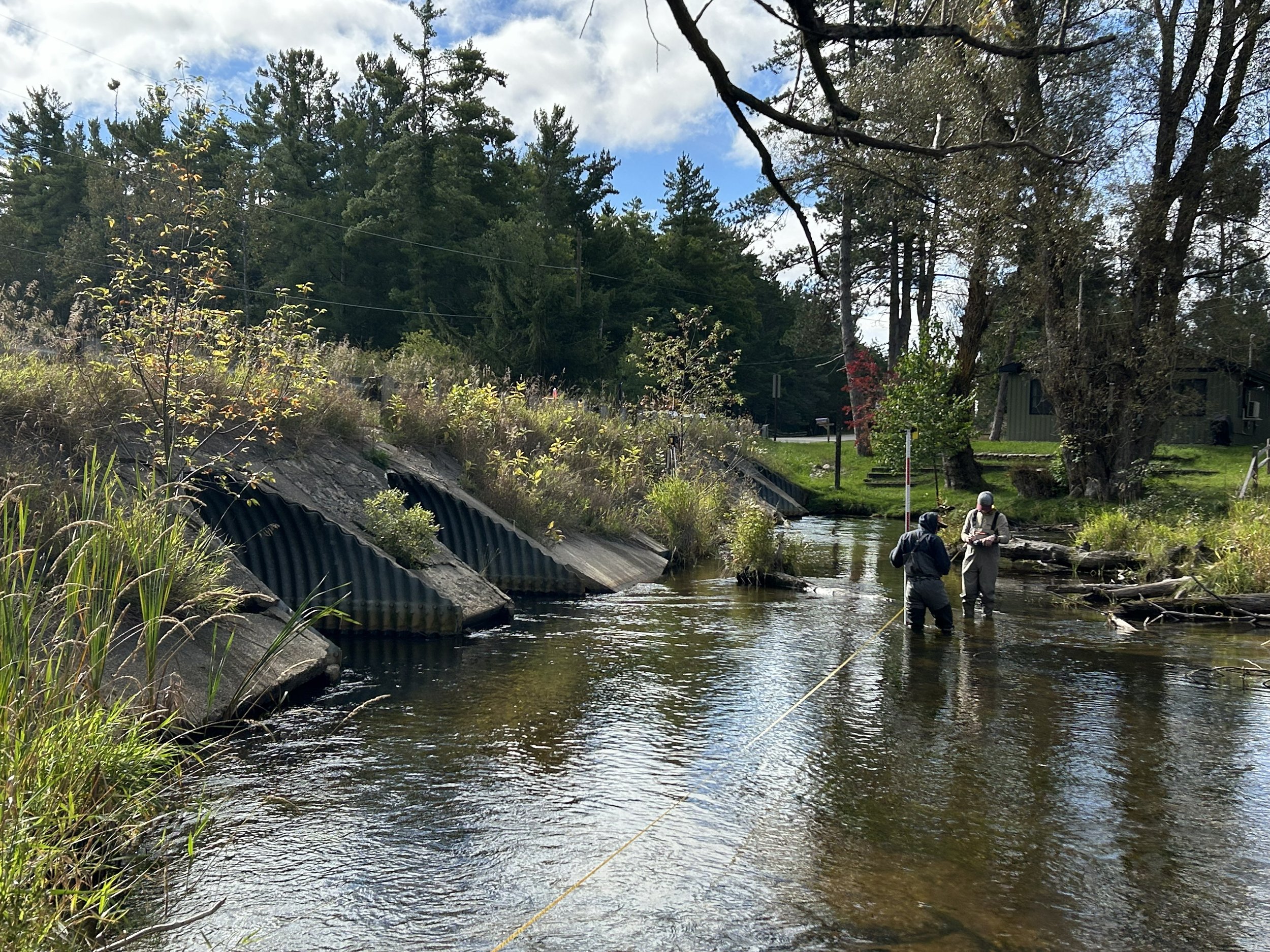
Huron Pines staff take measurements near two of the four existing culvert pipes at Twin Bridge Road.
Xxxxx