
Conservation Runs Deep in Tawas
A year of wins for endangered plovers, coastal habitats and the community’s natural heritage
It was the moment our staff and volunteers had waited weeks to see: Four Great Lakes piping plovers — hatched from salvaged eggs, raised in captivity and chauffeured 150 miles to the Lake Huron shore that morning — were about to take their first steps as wild birds. In a flash of marbled wings, the fledgelings sprang from their carrier and made for the waves of dunegrass welcoming them back to Tawas Point, the summer home for Michigan’s rarest shorebird.
The triumphant release of these birds in July notched another conservation win in the Greater Tawas Area, a community which has rallied around the ongoing recovery of this endangered species. Volunteer monitors with Au Sable Valley Audubon logged over 600 hours this summer observing nesting plovers and informing beachgoers of their presence, and alerted the Great Lakes Piping Plover Conservation Team to an abandoned nest where four eggs were recovered. Hatched by zookeepers at the University of Michigan Biological Station and released to their home beach, we can await the return of these iconic birds this spring and see life come full circle in Tawas.
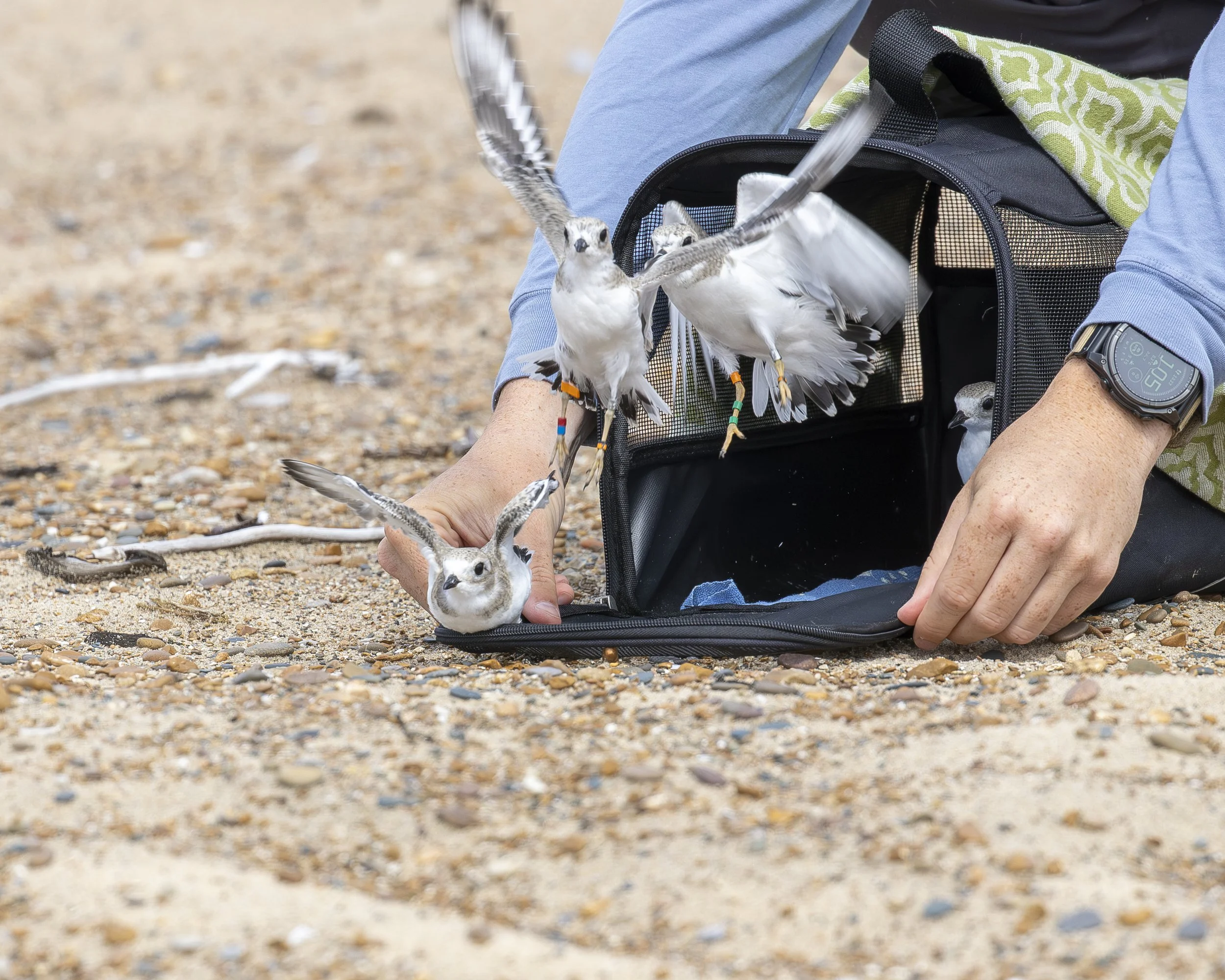
Four captive-reared Great Lakes piping plovers, hatched from eggs rescued from an abandoned nest, are released back to the shore of Tawas Point State Park. Nicknamed “The Boys of Summer” by our volunteers, the plovers may return to nest this spring. Photo courtesy Konnie Spenceley.
The plover may have been our mascot last season but the broad conservation work happening across the region runs much deeper. A bold initiative back in 2020 to protect nearly a mile of undeveloped shoreline as Lake Huron Coastal Preserve demonstrated the Tawas community’s ties to its natural resources and a commitment to their protection (see page 10). This year we further restored the preserve by treating 82 acres for invasive Japanese barberry and wild parsnip, a toxic plant, ensuring its woods and wetlands endure as a sanctuary for wildlife and as a destination where you can connect with nature.
We extended our stewardship work with the U.S. Forest Service to Tuttle Marsh, removing another 16 acres of invasive phragmites in an ongoing effort to restore vital habitat for migratory birds and retain unobstructed views of this wetland complex, a favorite among birdwatchers. Roadside areas we seeded in past years bloomed in abundance with native wildflowers this summer, adding color and important biodiversity to its marshlands.
Every species brings value to Northern Michigan’s native ecosystems and makes them more resilient to change. This is on full display at Tawas Lake, a shallow, sprawling waterway that’s home to more than 40 species of native water plants including wild rice and carnivorous bladderwort. In August we welcomed 32 people for an evening paddle tour of the lake during our annual Tawas Lake Day, where our staff and partners shared the important conservation happening here to benefit aquatic ecosystems and support water quality for the Tawas community.
Every aspect of Huron Pines’ conservation mission is underway in Tawas. Your support enables us to show up, year after year, helping communities turn their vision for conservation into reality. From habitat restoration to community engagement, you make this work possible. Together, we’re creating lasting, purposeful impacts for the region’s waters, wildlife and people in Tawas and across all the communities we serve in Northern Michigan.