
Connected Waters, Shared Stewardship: The Thunder Bay Watershed Story
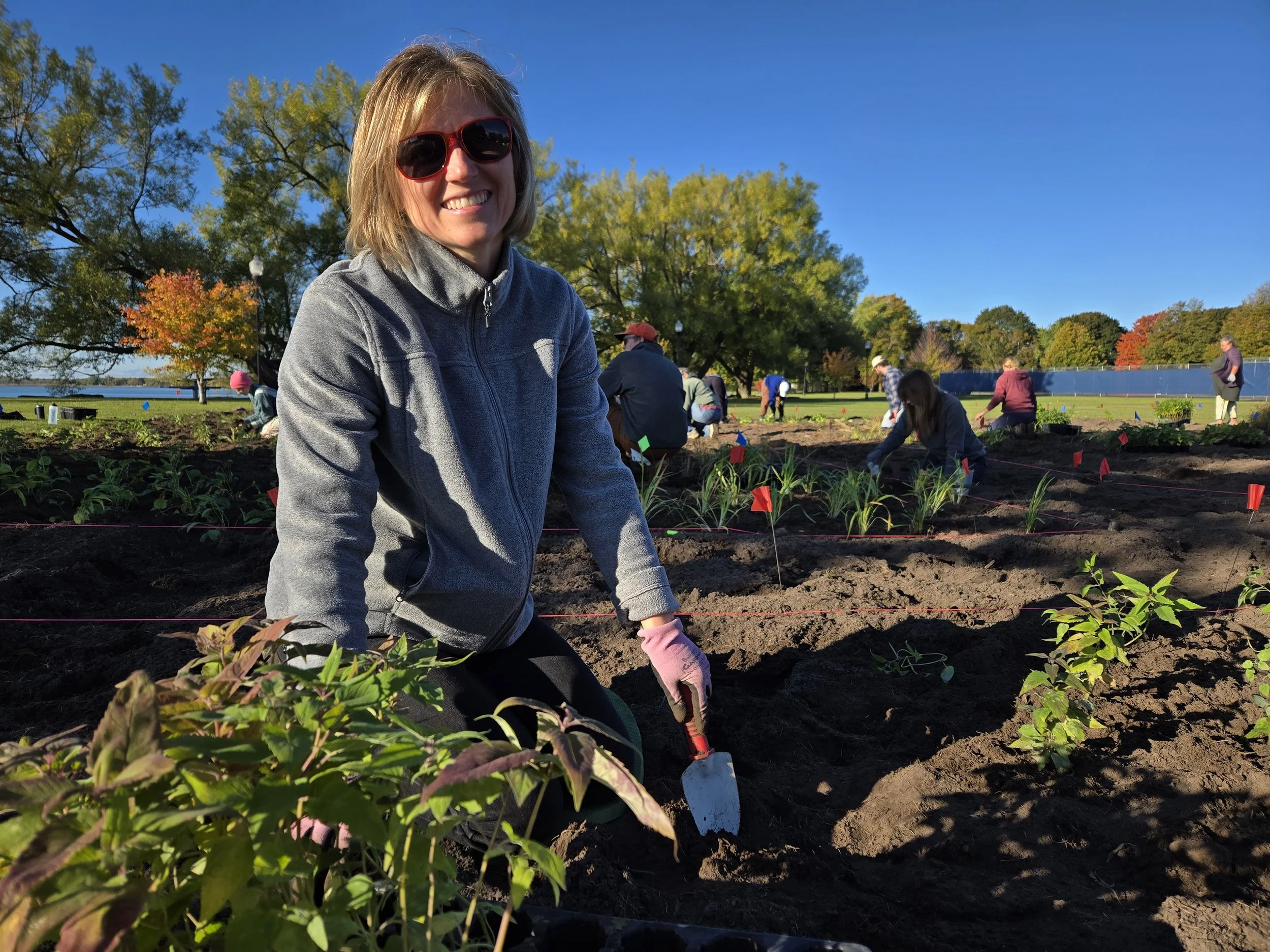
Montiel Birmingham, Planning, Development & Zoning Director for the City of Alpena, helps install a pollinator garden at Alpena’s Bay View Park in October.
The Thunder Bay Watershed encompasses 1,250 square miles of Northern Michigan — a vast network of streams, rivers and wetlands all flowing to Lake Huron at Alpena. Thanks to strong local partnerships and your support, Huron Pines is addressing environmental threats to this region at a watershed-wide scale. From its headwaters in Montmorency County to where the river meets Thunder Bay in Alpena, we are working to reduce stormwater runoff, restore habitats for fish and wildlife, and ensure clean drinking water for the communities we serve.
A new timber bridge constructed last fall at Hossler Road marked our seventh successful road/ stream crossing restoration in this watershed since 2020. This $3 million total investment in new infrastructure has reconnected 120 miles of vital habitat for trout and other river life, reduced repair costs for road commissions, and is building a watershed that’s more resilient to a changing climate.
Watersheds with forests covering more than half their land area have better water quality than those with fewer trees and result in lower treatment costs for municipal water utilities, including Alpena’s which sources its drinking water from Lake Huron. To further benefit water quality, our staff and volunteers planted 4,000 new trees last fall to boost forest cover, and installed another thousand willow shrubs to fortify an eroding streambank, all on private lands along the Thunder Bay River. By involving landowners in this effort, we push our impact beyond property lines and empower individuals to promote clean drinking water.
As a Lake Huron Forever Community, the City of Alpena made significant strides in 2025 in support of its pledge to protect water quality and engage its residents in conservation efforts. Working shoulder to shoulder with our team, volunteers and City staff installed a rain garden and pollinator garden at Bay View Park in October. Once established, these deep-rooted native plants will filter thousands of gallons of stormwater annually, provide habitat for birds and beneficial insects, and serve as a community showpiece of native landscaping for residents and visitors.
“These projects are highly visible, practical demonstrations of Alpena’s commitment to sustainable stormwater management and long-term protection of Lake Huron as pledged in the City’s Lake Huron Forever roadmap,” said City Manager Rachel Smolinski.
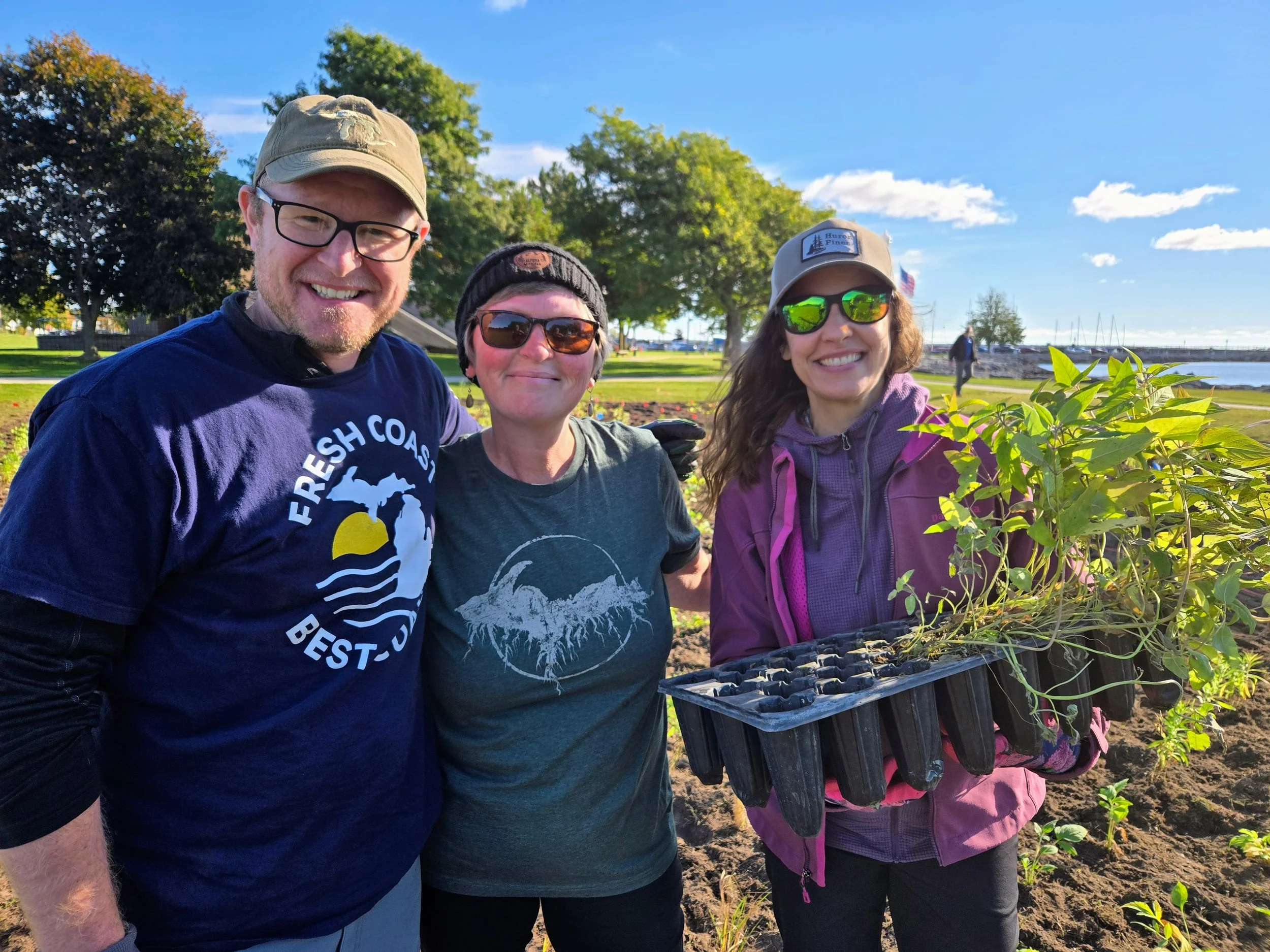
Dave Schuberg of Michigan EGLE's Coastal Management Program, Alpena City Manager Rachel Smolinski, and Huron Pines Senior Project Manager Amy Nowakowski participate in a native planting at Alpena's Bay View Park.
In recognition of their leadership in conservation, Huron Pines presented the city with the Community Conservation Leadership Award at a November celebration in Alpena.
“The City of Alpena has shown that effective conservation is not just about restoring habitats or building infrastructure, it’s about building community — fostering partnerships, inspiring stewardship and creating a culture of care for the natural world,” said Samantha Nellis, Director of Conservation Science at Huron Pines.
By spring 2026 we will have completed the Thunder Bay Watershed Management Plan, the product of more than two years of field work identifying ongoing threats to water quality across the watershed. Useful in leveraging state and federal grants to help tackle these issues, this guiding document will shape the next decade of high-impact work by Huron Pines and our partners to protect this region for generations to come.
From planting trees along private streambanks and restoring road crossings to reconnect miles of habitat, to municipal stormwater solutions and watershed-wide threat assessments — each project strengthens the next. This is conservation at a scale that matters: an interconnected strategy protecting clean water, healthy habitats and thriving communities from the headwaters to Lake Huron. Together, we’re building a better future for the region and all who call it home.