Big Impact in The Big Wild
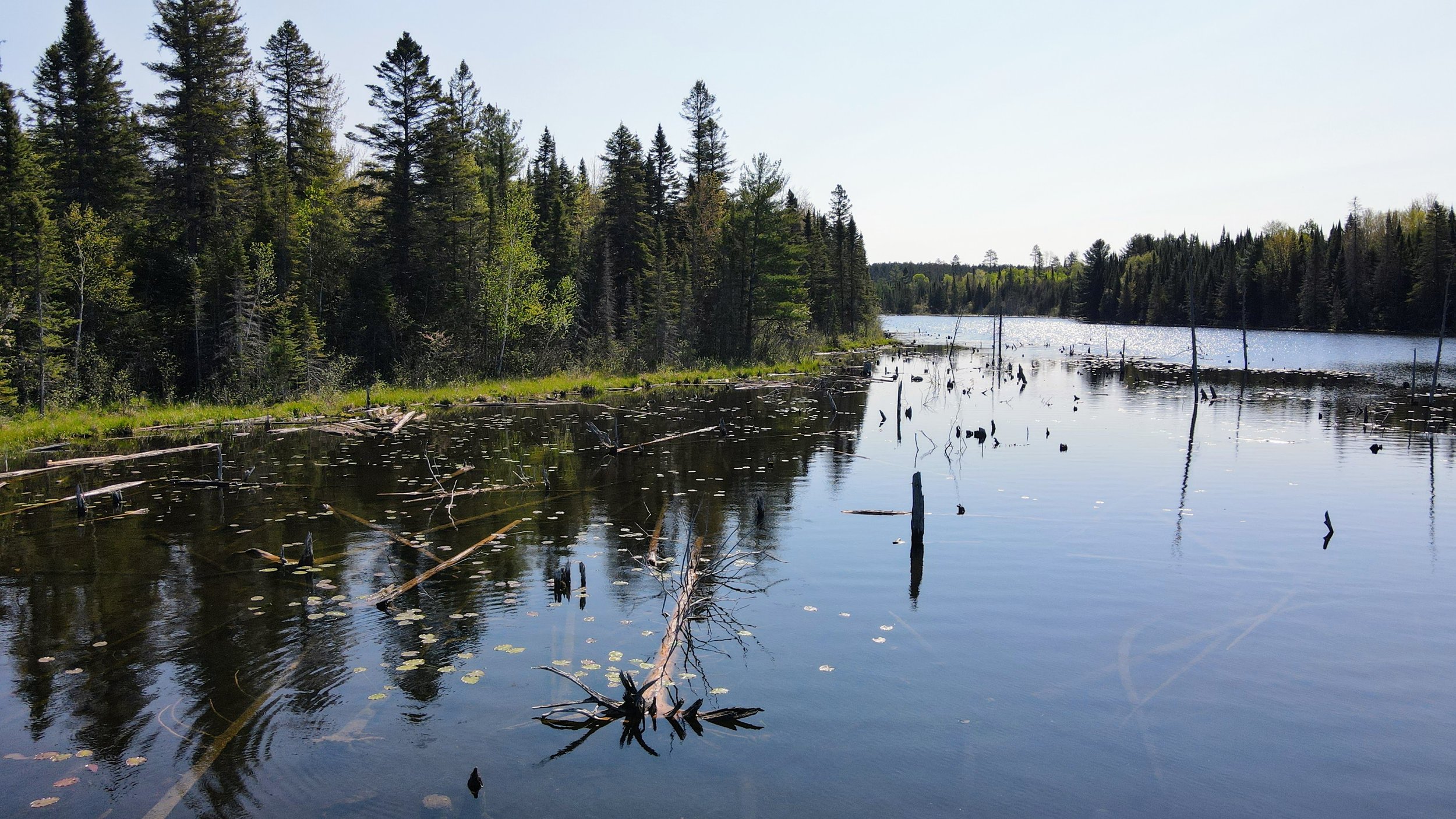
The Pigeon River Country State Forest meets Cornwall Creek Flooding.
With its famed streams, remote lakes and vast forests where the calls of wild elk echo, the Pigeon River Country (PRC) State Forest is one of Michigan’s most iconic landscapes. Beloved as “The Big Wild” in both spirit and scale, this region represents what is possible when long-term stewardship meets community support. Your generosity sustains and strengthens a legacy of protecting and restoring this remarkable place while inspiring the next generation to carry its stewardship forward.
This commitment took a major step forward in September when we transferred ownership of the Elk Run tract — 236 acres of upland forests woven with wildlife trails in southern Cheboygan County — to the Michigan Department of Natural Resources (DNR). Your commitment to conservation has permanently protected 2,800 additional acres within the PRC this past decade; strengthening Michigan’s most expansive public forest for future generations. Every acquisition builds a protective buffer around trout streams to keep them clean and cold, provides vital habitat for wildlife, and maintains our treasured hunting, fishing and outdoor heritage.
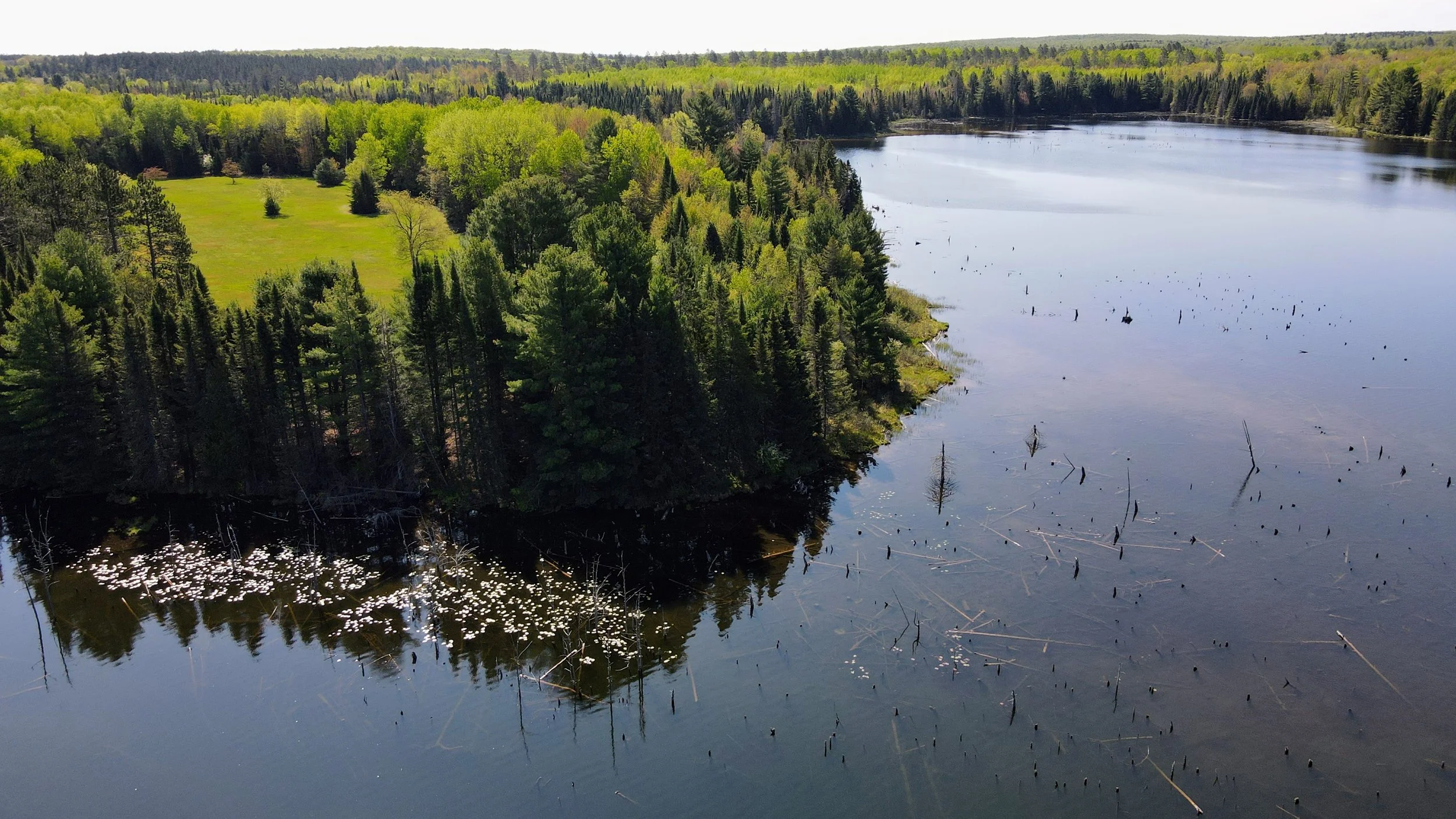
A forest opening gives way to Cornwall Creek Flooding, a popular recreation area in the heart of the Pigeon River Country State Forest.
Just four miles east of Elk Run, our collaborative partnership with the DNR is playing a major role in preserving one of the forest’s most cherished features. Cornwall Creek Flooding is a popular fishing destination and pristine wilderness experience where early-rising anglers are rewarded with loon songs in the morning fog. Critical dam renovations that began last summer will conclude this spring to enhance public safety and protect downstream habitat so families can continue making lasting memories at this special place like no other in Michigan.
Culminating in 2025, a years-long project transformed a former gravel pit on the southern edge of the PRC back into thriving prairie habitat, marked by the return of native wildflowers and grasses planted by our staff. Repeated treatments by our team, followed by seeding and planting to rebuild the soil, has resulted in a lush landscape that serves beneficial insects, birds and all kinds of wildlife which make their home in this forest.
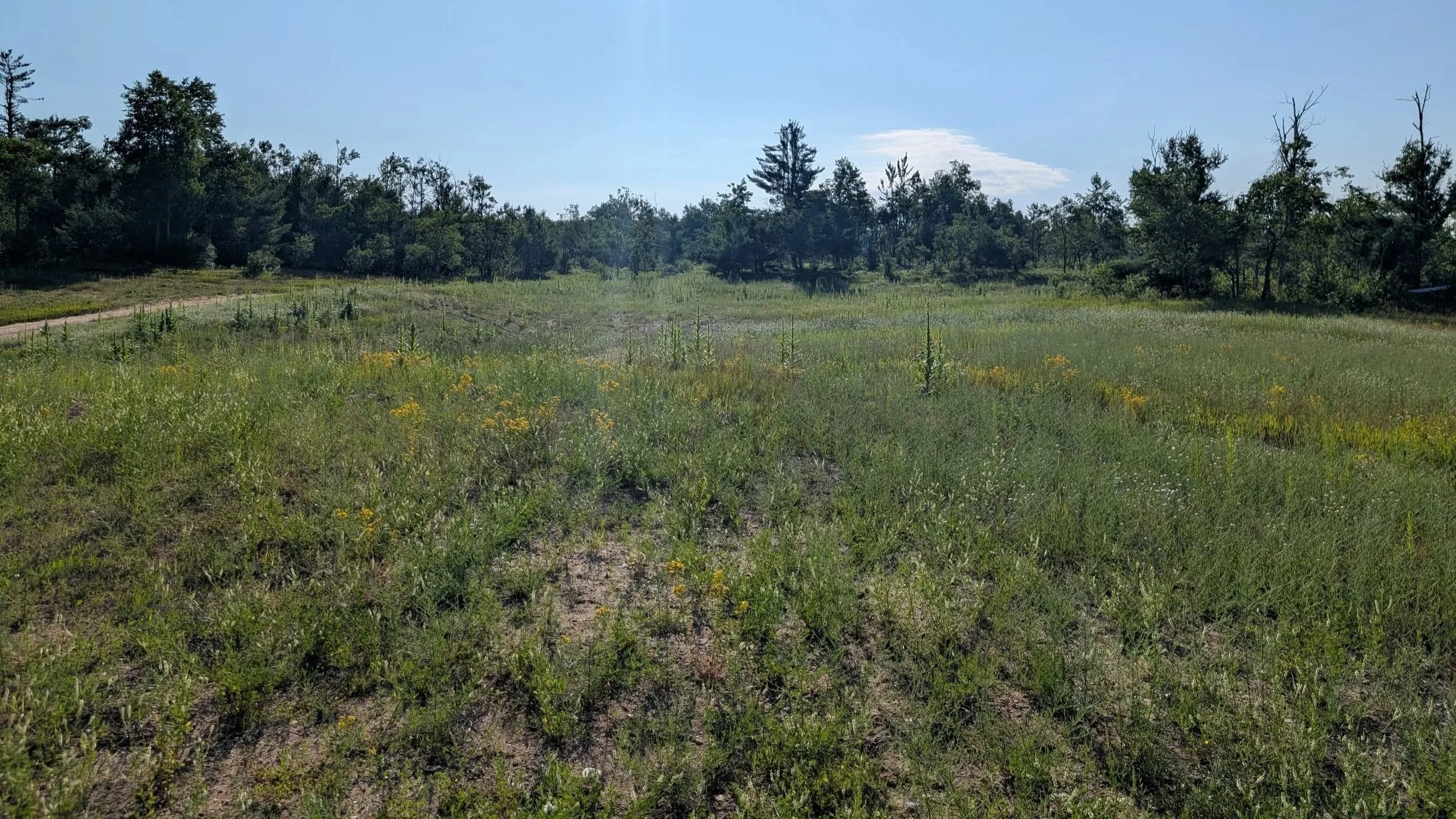
A former gravel pit at Roberts Road, at the edge of the Pigeon River Country State Forest, is being restored to a wildflower prairie through the Huron Pines Stewardship Program.
Protecting the health of these ecosystems also means responding quickly to emerging threats like invasive species which disrupt its sensitive ecosystems. By catching infestations early, we ensure harmful species like black locust, garlic mustard, Japanese barberry, Phragmites, purple loosestrife and wild parsnip can’t gain a foothold in habitats they could otherwise overrun. Our staff treated 135 acres of the PRC for these species in 2025, effectively preventing their spread to surrounding forest and wetland habitats.
Sharing these successes and deepening public understanding of our stewardship work is another vital part of our mission. Last fall, we welcomed community members to the Pigeon River Country Discovery Center for a workshop led by Restoration Specialist Abby Macek who introduced participants to our Native Seed Program, showing how collecting and dispersing wildflower seed can support biodiversity where they live. At a second workshop, Habitat Project Manager Bryant Eddy spoke about the habits and history of ruffed grouse and how forest management — including sustainable timber harvests and prescribed fire — promote healthy populations of Michigan’s “thunder chicken.”
From restoring prairies and protecting waterways to inspiring future stewards, your impact can be seen throughout the Pigeon River Country. In 2025 alone, nearly $3 million was invested to safeguard habitat, strengthen infrastructure and expand public engagement across this extraordinary forest. Each acre protected, each stream kept cold and clean, and each community member inspired reflects your leadership. Because of you, “The Big Wild” remains wild — and will for generations to come.